Ransomware Risk
Healthcare organizations remain one of the most frequently targeted industries for ransomware attacks.

Protect patient data, strengthen HIPAA compliance efforts, and reduce cybersecurity risk with managed security services designed for healthcare providers, clinics, specialty practices, and healthcare networks.
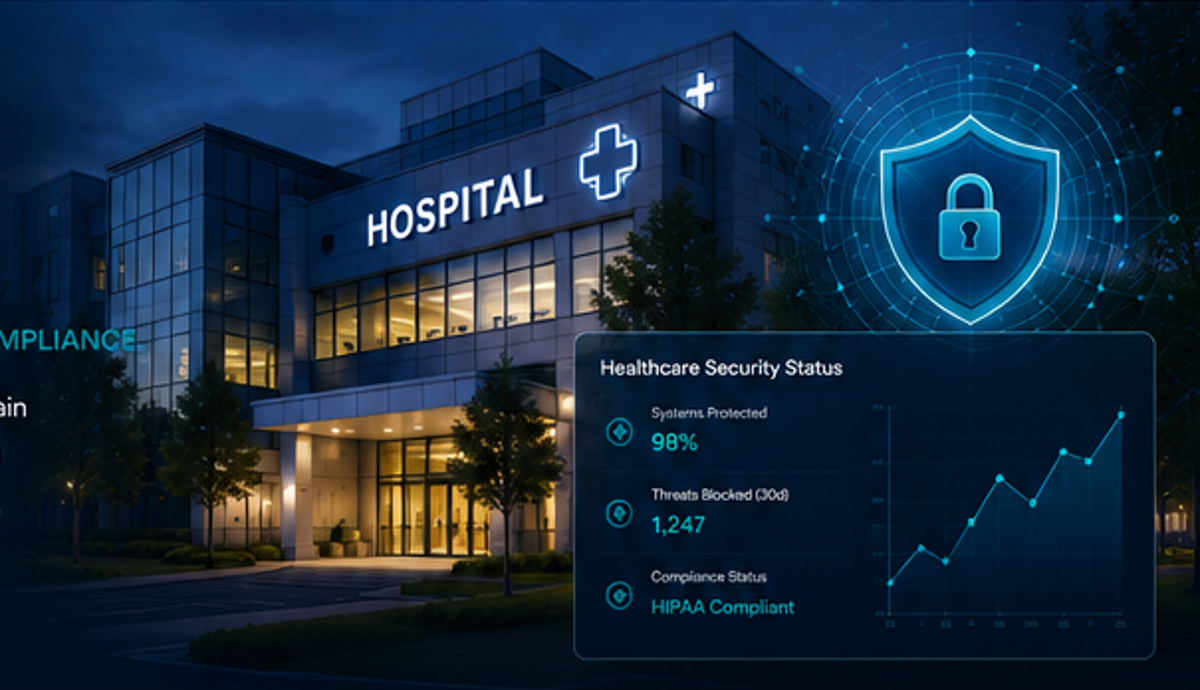
Healthcare organizations remain one of the most frequently targeted industries for ransomware attacks.
Patient records contain highly valuable information that must be safeguarded against unauthorized access.
Many healthcare organizations lack the internal security resources needed to monitor modern threats.
Organizations must continuously demonstrate appropriate safeguards for sensitive healthcare information.
Healthcare organizations face threats that can disrupt patient care, expose protected health information, and create significant financial and compliance pressure.
Ransomware can disrupt scheduling systems, patient records, billing platforms, and clinical operations. DBT helps healthcare organizations improve detection, monitoring, recovery readiness, and response coordination.
Connected devices, legacy operating systems, and specialized clinical technology can create visibility gaps. DBT helps organizations identify risk and improve monitoring across complex healthcare environments.
Credential theft, phishing, vendor impersonation, and fraudulent payment requests remain major threats. Identity security and monitoring help reduce the chance that stolen credentials become a larger incident.
Healthcare organizations rely on EHR platforms, billing vendors, SaaS tools, and external partners. DBT helps improve visibility into security events and reduce risk across interconnected systems.
Centralized visibility and monitoring across complex environments.
24x7 detection, investigation, and response support for active threats.
Reduce credential risk through modern authentication and access controls.
Identify and prioritize weaknesses before attackers can exploit them.
Healthcare organizations face increasing pressure to improve security visibility, monitor threats, document security controls, and demonstrate ongoing cybersecurity maturity.
DBT helps healthcare organizations implement layered security controls, monitoring, identity protection, vulnerability management, and security operations programs that support broader HIPAA compliance efforts.
Our team works alongside healthcare leadership, IT departments, and compliance stakeholders to improve operational security while reducing risk to patient data and critical systems.
Healthcare compliance requires more than policies and annual reviews. Organizations need practical safeguards, security visibility, access controls, vulnerability management, monitoring, and documented response processes that support ongoing risk reduction.
DBT helps healthcare organizations strengthen administrative, physical, and technical safeguards by improving identity protection, monitoring, endpoint security, vulnerability management, and operational security practices.
Healthcare organizations need the ability to detect, investigate, and respond to potential security incidents. DBT helps improve logging, alerting, investigation workflows, and response coordination to support breach readiness efforts.
Some healthcare-adjacent organizations may face additional security expectations related to consumer information, financial data, or service provider risk. DBT helps align cybersecurity controls with practical business and compliance needs.
State-level privacy and security expectations continue to evolve. DBT helps organizations build security programs that improve visibility, reduce preventable risk, and support stronger documentation of cybersecurity efforts.
DBT does not guarantee compliance. Instead, we help healthcare organizations implement, operate, and improve cybersecurity controls that support broader compliance and risk management initiatives.
DBT brings together managed security, identity protection, compliance support, and IT operations to help healthcare organizations reduce risk without overwhelming internal teams.
Centralized log collection and security monitoring help healthcare organizations detect suspicious activity across endpoints, cloud services, identity platforms, servers, and business systems.
Learn about Cybersecurity Operations →DBT provides access to 24x7 detection and response capabilities so healthcare organizations can identify, investigate, and respond to threats without building a full internal SOC.
Explore MXDR services →Healthcare users need secure access to sensitive systems without adding unnecessary friction. DBT helps modernize authentication, reduce credential risk, and improve access control.
Review Identity Security →DBT helps healthcare organizations identify weaknesses, prioritize remediation, and reduce exposure across servers, workstations, cloud services, and connected systems.
See Compliance & Risk services →Penetration testing helps validate security controls, identify exploitable weaknesses, and provide leadership with a clearer view of real-world security risk.
View Penetration Testing →Strong cybersecurity depends on reliable IT operations. DBT supports patching, endpoint management, Microsoft 365, backups, monitoring, and day-to-day IT support.
Explore Managed IT Services →DBT combines managed IT services, cybersecurity operations, identity security, compliance support, and threat monitoring into a unified security program.
We help healthcare organizations strengthen security operations while maintaining focus on patient care and organizational objectives.
Gain insight into threats, vulnerabilities, and security events.
Accelerate detection and response through managed security operations.
Strengthen defenses against ransomware, phishing, and credential attacks.
Yes. DBT helps healthcare organizations improve cybersecurity controls, visibility, monitoring, documentation, and security operations that support HIPAA compliance initiatives.
Yes. Our MXDR and SOC services provide continuous monitoring, threat detection, investigation, and response support.
Yes. We support organizations ranging from specialty practices and clinics to multi-site healthcare providers.
Healthcare organizations commonly address HIPAA Security Rule requirements, HITECH requirements, state privacy regulations, cyber insurance requirements, and other industry-specific expectations.
Healthcare MXDR combines security monitoring, threat detection, investigation, and response services to help healthcare organizations identify and contain threats more quickly.
A SOC is a team and technology platform focused on monitoring, investigating, and responding to cybersecurity threats across an organization.
Most healthcare organizations should conduct penetration testing at least annually and after significant infrastructure or application changes.
Healthcare organizations can improve medical device security through asset visibility, vulnerability management, network segmentation, monitoring, and vendor risk management.
Yes. DBT supports healthcare organizations with multiple locations, remote users, cloud services, and distributed environments.
Organizations should activate incident response procedures, isolate affected systems, preserve evidence, engage appropriate experts, and begin recovery efforts while maintaining communication with leadership and stakeholders.
Learn how DBT can help improve visibility, reduce cybersecurity risk, strengthen security operations, and support your organization's security and compliance objectives.